Problems arrive scattered
Breakdowns, no-shows, bunching and overcrowding show up across AVL screens, radio calls, maintenance systems and spreadsheets.
Ordova ITMS by Go2Ways
Ordova is an Intelligent Transport Management System (ITMS) for bus operators and transport authorities. Every breakdown, delay and no-show arrives with a suggested fix, so your team approves a recovery in one step instead of a round of phone calls.

Bus 4021 stalled · Route 12
47 passengers · 12-min cascade projected
One disruption, step by step
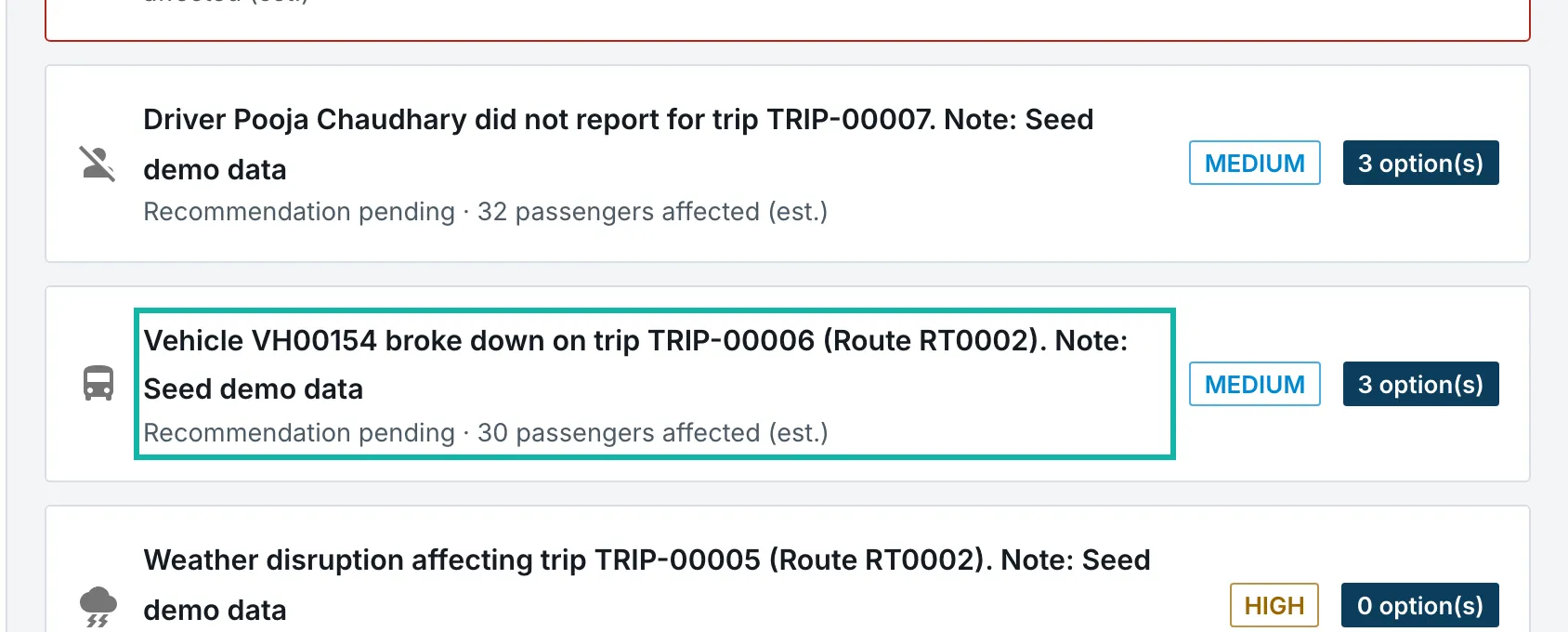
Step 1
A breakdown appears in the Action Center queue with its severity and the passengers affected. Nobody has to call it in.
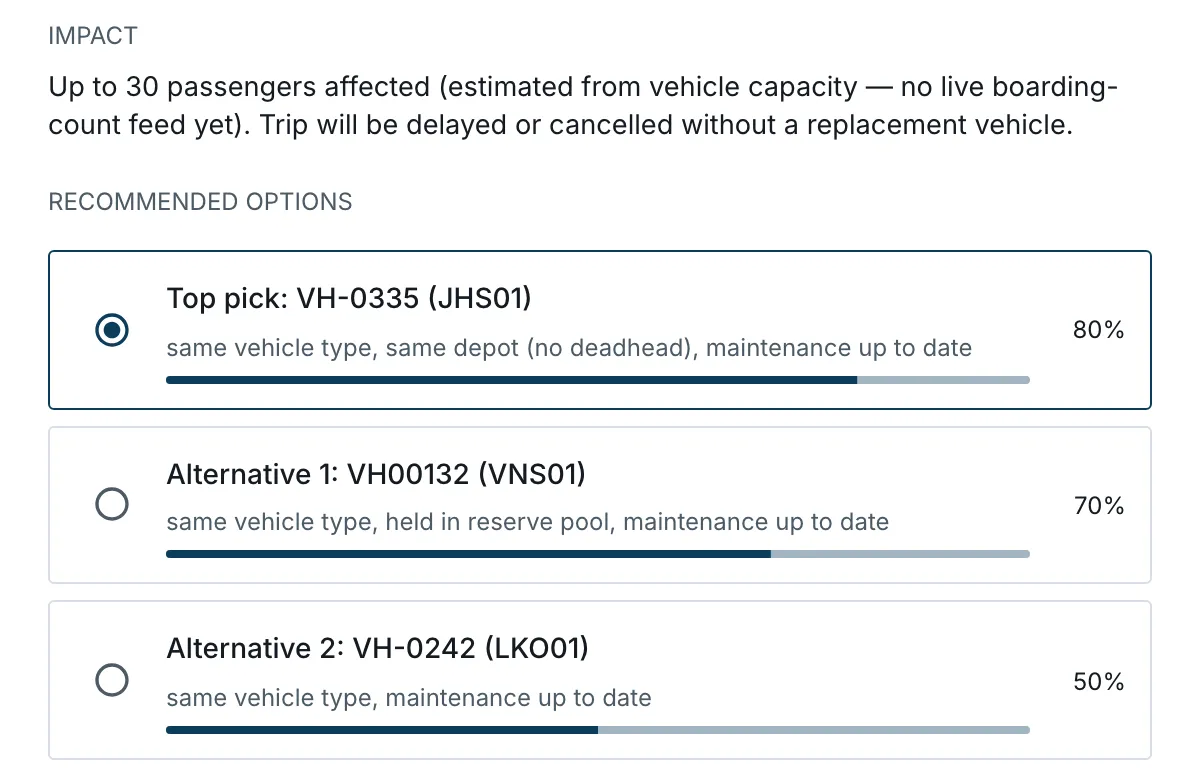
Step 2
Ordova ranks replacement vehicles by fit and shows why: same vehicle type, same depot, maintenance up to date.
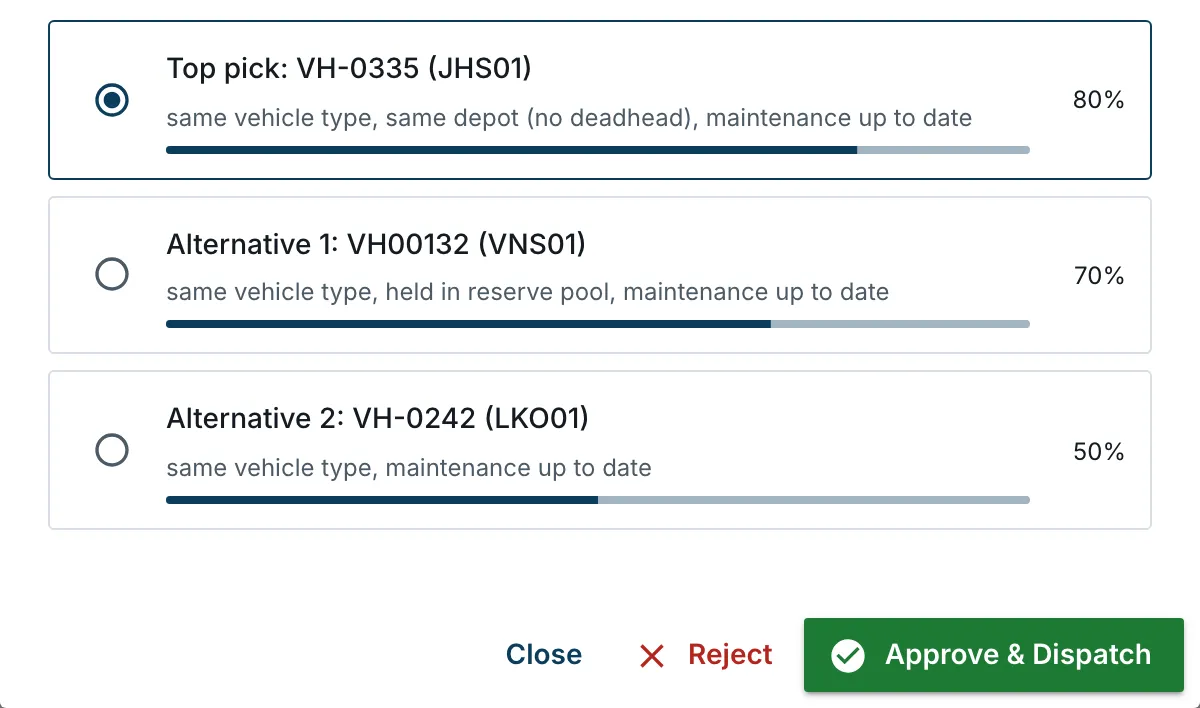
Step 3
The dispatcher picks an option and approves. Ordova dispatches it and records the decision in the audit trail.
Real Ordova screens · demo data
The problem
Breakdowns, no-shows, bunching and overcrowding show up across AVL screens, radio calls, maintenance systems and spreadsheets.
Five to seven screens and several phone calls per incident. Reassigning one bus takes 8–12 minutes.
Reliability, cost and compliance arrive in end-of-day reports, long after the moment to act has passed.
Watch · under a minute
A bus fails on Route 12 during the evening rush. See how Ordova finds the right reserve bus and driver, notifies passengers and keeps the service running, while the dispatcher stays in control.
8:14 am. Bus 4721 stalls on Route 12. 47 passengers on board, that too at peak hour. And it's never just one problem. A driver no-show. An overcrowded stop. Dispatchers juggle radios, screens and calls, reacting one fire at a time. Meet Ordova: vehicle planning and scheduling dispatch. One command layer for planning, scheduling, fleet, drivers, maintenance and live dispatch. It recommends bus and driver 4198, nine minutes away. The dispatcher approves in one click. Driver dispatched. Passengers notified. And recovery? Well, that's verified. For safety, labour and passenger decisions, AI recommends. Your team decides. Faster decisions, fewer cancellations and more buses available for service. Stop reacting to disruptions and start orchestrating operations. Book an Ordova demo today.
How Ordova works
Every deviation from plan arrives as one card: the problem, its impact, a recommended fix and alternatives. AI recommends and a person approves. Try it below.
Problem
Detected via GPS stall + driver call
Impact
Expected result
Restores schedule within 18 min · deadhead cost $34
Ordova’s Action Center queues every exception awaiting a decision, with severity and estimated passenger impact. No recommendation executes on its own: a dispatcher approves it.
How the AI stays under human control
One platform, six modules
Start with the modules you need. Every one shares the same live data, so a plan built months ahead, a breakdown at 08:14 and the regulator’s report at month-end all draw on one picture.
Network, route, trip and capacity planning.
6 capabilitiesLive operations, crew and vehicle assignment, disruption management.
8 capabilitiesVehicles, depots and maintenance coordination.
5 capabilitiesDashboards, predictive analytics, revenue, safety and compliance.
5 capabilitiesAI recommendations and decision support.
1 capabilityMaintenance, GPS, ticketing, ERP and other integrations.
1 capabilityWhat changes
Planning targets for an operator adopting Ordova, not results from a customer. In the example business case, payback is 16–20 months after go-live. Your own baseline replaces these numbers.
Time to reassign a vehicle
2–3 min
from 8–12 min today
Illustrative target
On-time performance
88–90%
from 78% today
Illustrative target
Fleet availability
92%+
from 85% today
Illustrative target
Integrations
Your maintenance, fare collection, ERP and HR systems keep their records. Ordova connects them and decides what should happen right now. Nothing to rip and replace.
See how integration worksNext step
We’ll walk you through Ordova using your routes, fleet size and current systems.